
Rockbridge County Bench Warrants Explained
A bench warrant is court process that can follow a missed appearance or another ignored court order. The label on the docket matters. Virginia courts also use summonses, show-cause orders, capiases, and arrest warrants, and each takes a different path. An unpaid balance alone tells you nothing about whether a warrant issued. Rockbridge County judges work from the state framework in Virginia Code §19.2-128, which covers willful failure to appear and sets consequences based on the underlying matter. Missing a date does not guarantee a warrant, and it does not guarantee a public search will show one. Ask the clerk what event is recorded on your case. For the underlying matter, use the court selector in the official state search, then confirm the process with the court that set the date.
Rockbridge County’s Show-Cause Calendar
Lexington/Rockbridge General District Court lists show-cause matters on the first and third Monday at 2 p.m. Friday criminal and traffic arraignments sit on the same public calendar at 1:30 p.m. A posted setting, though, is not a promise that every missed-date case in Rockbridge County will be heard that day. The General District page asks for continuance requests at least five days ahead. If a date has already slipped by, call the clerk and ask what the docket shows and whether a judge must hear the next request. Never lean on a calendar alone, because a posted setting is only a route clue. The Lexington/Rockbridge General District Court page carries the schedule and the continuance directions straight from the court.
How Rockbridge County Bench Warrants Are Issued
When someone misses an appearance, the court record may note the nonappearance, set a show-cause event, issue process, assign a new date, or change release terms. None of that happens automatically in every case. The court's own order controls, and a public online result may show the charge and date without any current warrant-status field. Virginia Code §19.2-128 lets a court weigh mitigating circumstances, including illness, transportation failure, dependent-care needs, or an effort to contact the court. Those facts do not force a recall or dismissal, but they can matter when a Rockbridge County judge hears an explanation. The failure-to-appear statute spells out the legal framework. For the recorded process type and the next appearance, ask the clerk.
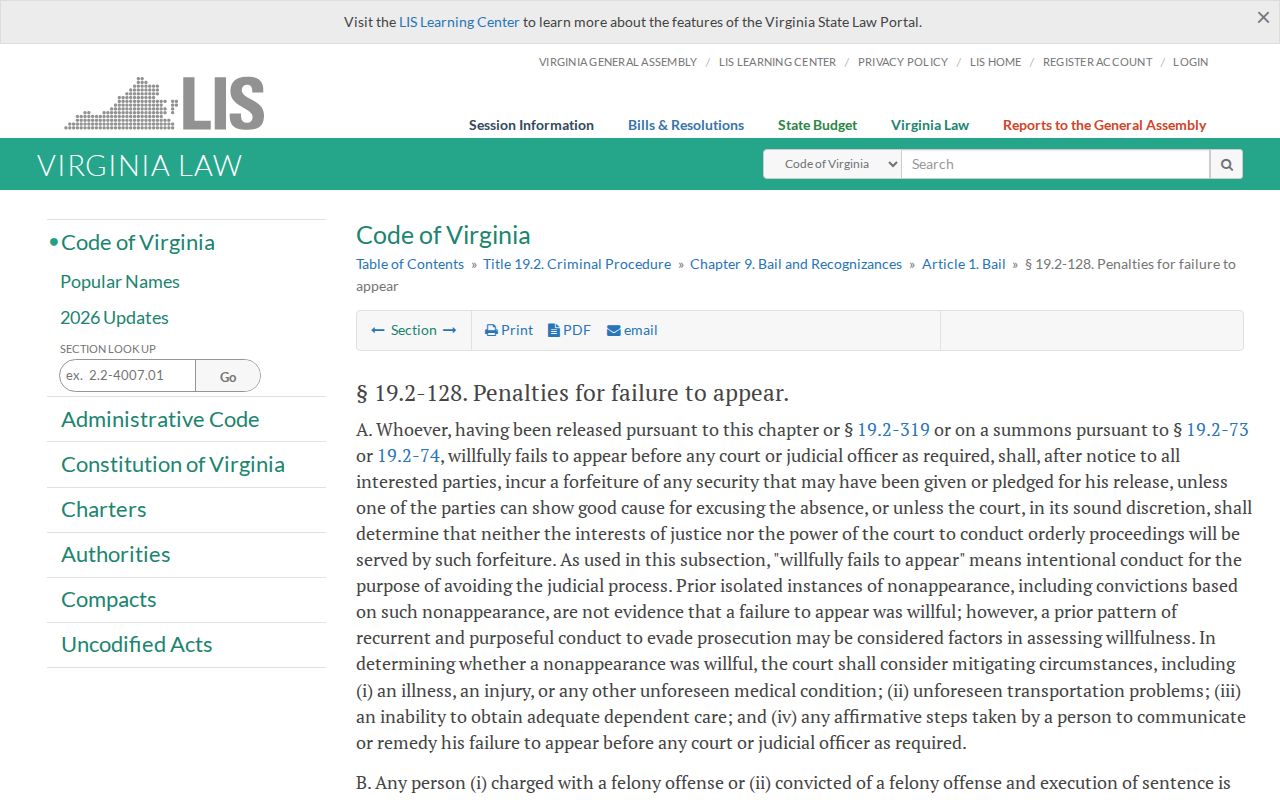
The state statute gives Rockbridge County courts a framework, not a case-specific answer. The clerk's docket and any later court order determine what actually happened.
Virginia FTA Law Allows Some Context
Section 19.2-128 covers willful failure to appear and recognizes circumstances a court may weigh, such as illness, a transportation problem, dependent care, or an affirmative effort to reach the court. A missed appearance can also create a new event or charge, depending on the matter. If something kept you away, write down what happened and when, plus any attempt to contact the clerk. Then ask whether a written motion, an attorney, or an appearance before a judge is required. A phone explanation alone does not automatically clear process in Rockbridge County.
Caution: Do not assume a missed date has disappeared from the docket. Confirm the court’s record and get any new appearance instruction in writing.
Bench Warrants and Arrest Warrants Compared
Bench warrants and arrest warrants both can carry arrest authority, but they start differently. A bench warrant ties to a court obligation. An arrest warrant generally follows a probable-cause process on an alleged offense. The Rockbridge County clerk can tell you which one, if any, appears in a case.
| Feature | Bench or FTA Process | Arrest Warrant |
|---|---|---|
| Trigger | Missed court date or unmet court obligation | Complaint and probable-cause process under law |
| Record route | Court holding the existing case | Issuing judicial officer and court case |
| Next question | What process and setting did the court enter? | Which court holds the charge and process? |
| How to respond | Ask counsel and clerk about appearance or motion | Ask counsel and court about process and release terms |
The companion arrest warrant search explains Virginia’s complaint and warrant route.
Capias Is Not a Catch-All Warrant
In Virginia, capias is a statutory process term, not a catch-all. Section 19.2-232 addresses capias after a felony indictment, and in some situations after a summons comes back with no appearance. Do not treat the word as a synonym for every bench warrant or unpaid court balance. Rockbridge County posts no public capias roster and no capias-specific payment portal. If a docket, notice, or clerk uses the term, ask which statute and court process it refers to, since local terminology can change the route to the file. Virginia Code §19.2-232 describes the capias process.
Resolving a Rockbridge County Bench Warrant
Rockbridge County publishes no walk-in surrender sheet, recall counter schedule, or universal resolution process. Each court controls its own steps, and what comes next can turn on the charge, the judge, bond terms, and whether a new date gets set. A licensed Virginia attorney is the right person to ask about legal strategy.
- Use OCIS or General District search to identify the court and case number.
- Call the clerk and ask what process appears, the next date, and whether the judge must hear a request.
- Ask counsel whether a motion, voluntary appearance, bond question, or continuance request is appropriate.
- Follow the court’s written instructions and keep any filed motion, order, or payment receipt.
Caution: A fine payment does not automatically recall a separate warrant, reset a missed hearing, or close the underlying case.
Buena Vista Has a Separate Setting
Buena Vista runs its combined district courts on a different clock than the Lexington/Rockbridge General District calendar. Criminal and traffic settings land on the first and third Thursday, with advisements at 8:30 a.m. and later settings at 9 a.m. and 2 p.m. The court page allows the clerk to grant a first continuance; later requests go to a judge. For a Buena Vista case in Rockbridge County, call the combined-court clerk at 540-264-2163 with the case number, hearing date, or charge in hand. A felony circuit matter takes the separate Buena Vista Circuit Clerk route at 540-261-8627. The Buena Vista combined courts page lists its address, clerk, and criminal/traffic dates.
Finding the Court That Issued the Warrant
A warrant in Rockbridge County always traces back to one issuing court, so the notice or case number is where the hunt starts. Lexington/Rockbridge General District takes adult traffic and misdemeanor matters. Rockbridge Circuit covers circuit and felony cases. JDR handles juvenile and family issues, with confidentiality limits attached. Buena Vista runs its own combined district and circuit courts. Glasgow and Goshen publish no separate municipal criminal court. The Circuit 25 court map shows how the region's courts fit together. A clerk can confirm the right docket, though law-enforcement intelligence and sealed material stay off limits. For who actually serves the paper, Virginia Code §19.2-76 lets officers execute process anywhere in the Commonwealth, which is why the serving agency in Rockbridge County may not be the court that issued the warrant.
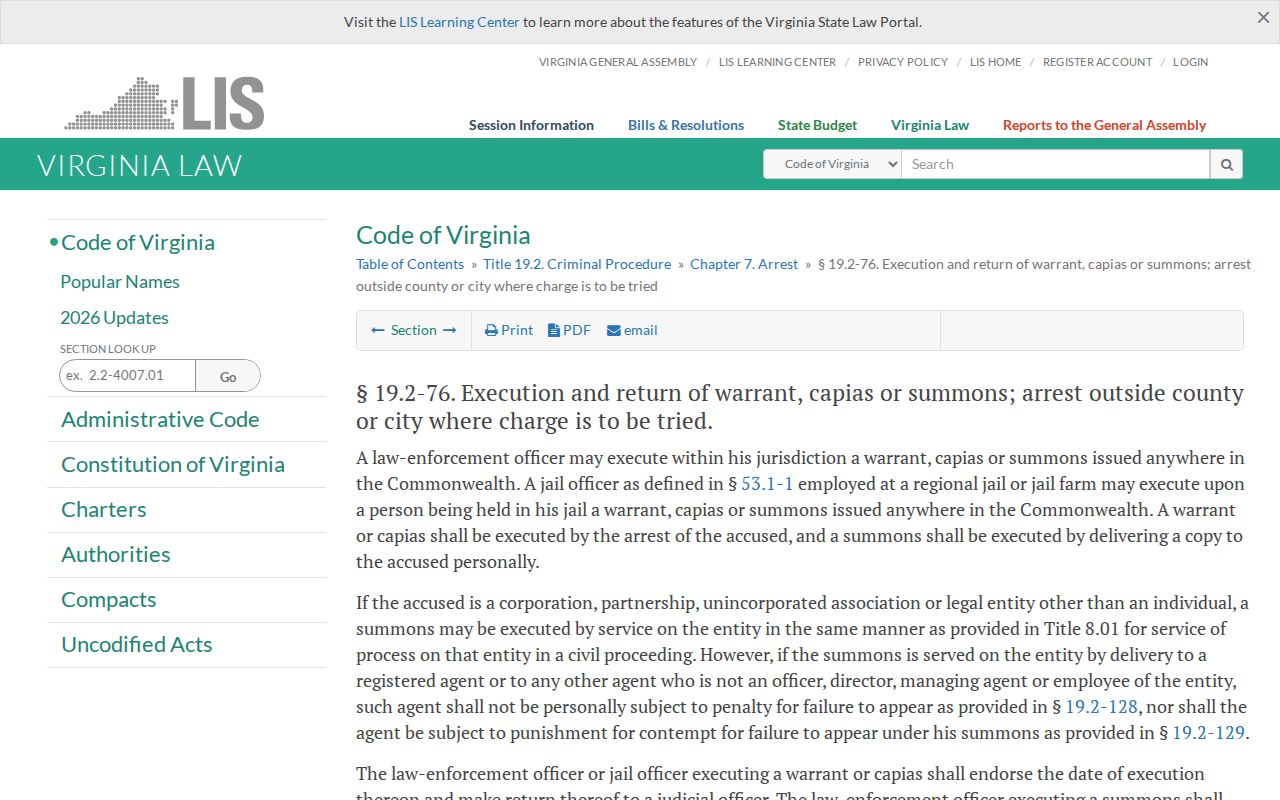
That split explains the puzzle: in Rockbridge County, the issuing court and the serving agency can each hold different pieces of one warrant record.
Payment Does Not Close the Case
Paying money does not end a warrant. Virginia Code §19.2-358 governs defaults on deferred or installment fines and costs. A court may respond with show-cause or capias process, yet a payment policy is not the same as a warrant recall. Ask the clerk whether the balance, the court date, and any outstanding process are separate issues in your case. Both Rockbridge General District and Rockbridge Circuit publish local fines-and-costs policies, and the state offers a DC-211 payment-agreement form for eligible matters. No countywide warrant fee, bond schedule, or universal online payment route exists here. Follow the court's payment-policy page and the clerk's local instructions, and keep whatever receipt, order, or new date the court hands back.